A new website goes live, everyone likes the design, and for a few days the team waits for the phone to ring. Weeks pass, and most of the few messages that arrive through the contact form have nothing to do with the service. At this point the question is almost always the same: "We built the site, so why are no customers coming?"
A website alone does not bring customers
A website is like a shop opened on a side street. However carefully the window is dressed, there are no sales if nobody walks past. Online, that main street is the search results page. Your potential customer types a need into Google, Yandex or Instagram's search bar and chooses one of the first few results they see.
In our experience, when a site gets no visitors the problem is rarely the design or the technology. The site has been built around words people do not actually search for, or, even when it targets the right word, it does not appear in the results in a way that earns the click. SEO is the discipline that closes exactly this gap.
What SEO is, and what it is not
SEO (search engine optimisation) is the body of work that makes a website visible in relevant searches, gets it clicked by the right people and helps visitors find what they came for. There are three separate goals here: being found, being chosen and being convincing. The quickest way to understand SEO is to be clear about what it is not.
It is not repeating a keyword over and over in the text. Search engines have long treated this as a negative signal.
It is not a setting you switch on once at launch and forget. Competitors, search habits and search engine algorithms keep changing.
It is not only a technical job. A fast, error-free site is necessary, but a fast site that targets the wrong word stays invisible.
It is not a service whose outcome can be guaranteed. A promise to "get you to number one" does not fit how search engines work.
Sound SEO rests on four pillars working together: reading search intent correctly, building a solid technical foundation, producing content that answers that intent, and looking worth clicking on the search engine results page (SERP). When one of them is missing, the investment in the others does not pay off fully.
One word, a different customer: search intent
Search intent is what a user actually wants to reach when they type a query. Two phrases can look almost identical while the person and the need behind them are completely different. Search engines rank results according to this intent, so the difference between singular and plural, information and purchase, or general and local directly decides who arrives at your site.
"İzmir çiçek" or "İzmir çiçekçi"?
Someone who types "İzmir çiçek" (İzmir flowers) may want to send flowers, but they may just as well be researching the city's gardens, a flower festival or plants native to the region. The intent behind "İzmir çiçekçi" (İzmir florist) is clear: they are looking for a business they can order from. A florist's home page and title should be built around the second phrase, and more specific searches such as "İzmir flower delivery" or "Bornova florist" should be answered with their own pages.
"Promotional product" or "promotional products"?
Singular versus plural looks like a minor detail, but it often signals a different intent. A plural search usually points to someone who wants to see options and is ready to browse a catalogue; a singular search may come from someone looking for a definition or focused on one specific item. Decide which is right for you by looking at the pages that rank for that phrase today, not by guessing. If category pages dominate the results, target the plural on your category page; if guides dominate, target the singular with a blog article.
General words versus words with intent
The same distinction appears in almost every sector:
"lawyer" versus "divorce lawyer in İzmir": the first is very broad and competitive; the person typing the second has told you both their city and their need.
"teeth whitening" versus "teeth whitening prices": the first is a search for information; the person typing the second is close to a decision.
"web design" versus "getting a corporate website built": everyone from students to agencies searches the first; the second points to a business ready to hire.
"shoes" versus "women's trainers": a small shop has little chance of appearing for the general word; on the narrower phrase that chance improves and the visitor finds what they want.
General words look attractive because of their volume, but they usually belong to the biggest players in the market and the intent of the visitor is unclear. Longer, more specific phrases, known as long-tail keywords, are searched less often, yet they bring the person who is actually looking for you to the right page.
How do the big brands do it?
Turkey's large e-commerce and travel sites name their category pages after the phrases users type into search engines, not after their own internal terminology. Looking at the current titles and addresses of these pages is the easiest way to see keyword choice in practice. The examples below were reviewed in November 2026.
Çiçeksepeti: the address of its İzmir page is /izmir-cicek and the main heading on the page is "İzmir Çiçekçi" (İzmir florist). The copy also uses "İzmir çiçek siparişi" (İzmir flower order) and links to separate flower-order pages for districts such as Bornova, Karşıyaka and Buca, so both city and district searches are answered by their own pages.
Trendyol: category pages are named with the exact pattern people search for, such as "Kadın Elbise" (women's dresses) or "Kadın Spor Ayakkabı" (women's trainers). Instead of one general "Shoes" page, there are pages split by who the product is for and what kind of product it is.
Hepsiburada: the address of its laptop category combines "laptop", "notebook" and "dizüstü bilgisayar" (the Turkish term), and the page title opens with "Laptop Fiyatları" (laptop prices). Users searching for the same product with different words, and users researching prices, all land on the same page.
Hotels.com: the title tag of its İzmir page combines "İzmir Otelleri" (İzmir hotels) and "İzmir Otel Fiyatları" (İzmir hotel prices). Whether the user wants a list of hotels or prices, the title they see matches their query.
What these brands have in common is clear: a separate, focused page for every important search pattern, with the searched phrase itself in that page's title. Small and medium-sized businesses do not need hundreds of pages on this scale, but they can apply the same logic to their own services and the areas they serve.
Appearing in the SERP and being clicked are two different jobs
Reaching the first page for the right word is only half the work. On the results page the user sees your site alongside many competitors and picks one within seconds. Three elements largely decide that choice: the SEO title, the meta description and the URL.
SEO title: the clickable headline in the search result. It should carry the target phrase near the start, stay around 50–60 characters and say clearly what the page offers.
Meta description: the short text under the title. It does not set rankings directly, but it influences the decision to click. In roughly 150–160 characters it should show that you answer the user's question and why they should choose you.
URL: a short, readable address that describes the topic builds trust. A structure such as "/izmir-flower-delivery" tells both users and search engines what the page is about, unlike "/page?id=123".
A weak and a strong title
For "Lale Çiçek", a fictional florist in İzmir, a weak home page title would be "Home | Lale Çiçek". It names neither the service nor the city and means nothing to someone who does not know the brand yet. A strong alternative could be "İzmir Florist | Same-Day Flower Delivery | Lale Çiçek". In a single line it conveys the search intent, the city and an advantage the user cares about.
The same logic applies to the meta description. Instead of a description that begins with "Welcome to our website", a concrete sentence that answers the user's question directly makes a click more likely.
SEO is not only about search engines: social media SEO
Search no longer happens only on Google. People look for a restaurant on Instagram, a product review on YouTube, a recipe on TikTok, a service provider on LinkedIn and a current topic on X. Each of these platforms has its own search engine, and they all work on a similar principle: they try to understand from the text what an account and its content are about.
Profile name and bio
On Instagram, the username, the name shown on the profile and the bio are among the fields matched in search. Instead of the brand name alone, a structure such as "Lale Çiçek | İzmir Florist" helps people who do not know your brand, but are looking for your service, to find you. Use your bio to state clearly what you do and where you work.
Captions and alt text
Captions are now written for discoverability as well as engagement. Describe what a post is about in natural language, using the phrases people would search for. Instagram lets you add alternative text (alt text) to images; it improves accessibility for visually impaired users and tells the platform what the image shows. On YouTube the video title and description play the same role, and on LinkedIn it is the profile headline and the company page description.
Use hashtags in moderation
Adding dozens of unrelated hashtags does not increase visibility; it blurs what the content is about. A few tags directly related to the topic mean more than a long, random list.
A consistent brand name and how you appear on Google
Social media profiles also rank on Google. Someone searching for a brand often sees its Instagram, LinkedIn or YouTube account in the results next to its website. Keeping the brand name, usernames, logo and contact details consistent across platforms, and linking from the site to the profiles and back, makes it easier for search engines to match these accounts to the same brand. Listing the social profiles in the website's structured data (Organization schema) supports this match as well.
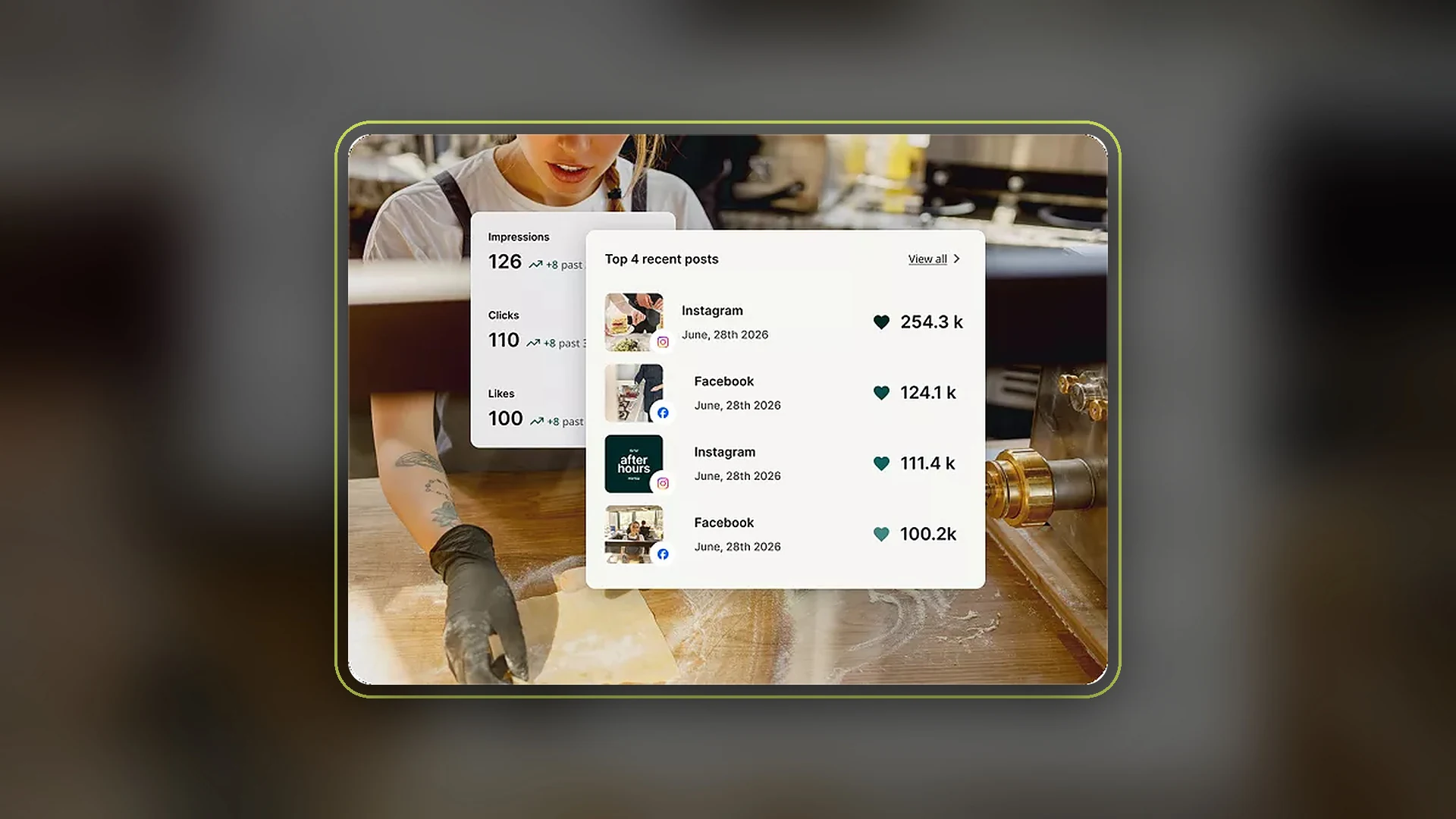
This is also why post statistics matter. Tracking which content earns impressions, clicks and likes shows which topics and phrases resonate with your audience, and that information feeds directly into the content plan for your website.
How should SEO be done? A step-by-step roadmap
1. Keyword research
Establish how your customers search for you with data rather than assumptions. Google Ads Keyword Planner, Google Search Console and the autocomplete suggestions in the search bar are good starting points. Assess every phrase from three angles: search volume, level of competition and search intent. A less searched phrase that directly describes your service often brings more customers than a high-volume phrase with unclear intent.
2. One page for each main keyword
Plan a separate page for every important service and every important search pattern. When a corporate website, an e-commerce site and an SEO service are all described on the same page, the search engine cannot tell which question the page answers. Several pages targeting the same phrase, on the other hand, compete with each other.
3. Align title, description and H1
A page's SEO title, meta description, URL and main on-page heading (H1) should all describe the same topic. The promise a user sees in the search result should be the first thing they see on the page.
4. Content depth
Anticipate the questions of the person searching for your target phrase: how is the price set, how long does the process take, what options are there, why should they trust you? Original, up-to-date content that answers these questions is worth far more than a short text that simply repeats the name of the service.
5. Local SEO and Google Business Profile
If you serve a particular city or region, Google Business Profile is one of the areas where results come fastest. The right category, a complete address and opening hours, current photos and reviews that are answered regularly all help you appear in map results. It also matters that your business name, address and phone number are written the same way on your website and on every platform.
6. Technical foundations
Pages that load quickly, work smoothly on mobile, can be crawled by search engines and are supported by structured data (schema) are the ground that keyword and content work needs in order to pay off. We cover this in detail in our article on technical SEO foundations.
7. Measure and update
Google Search Console shows which phrases you appear for, how often you are shown and how often you are clicked. Pages with many impressions but few clicks are the first candidates for better titles and descriptions; pages with no impressions at all are the first candidates for a keyword and content review. SEO is a process that is updated at regular intervals using this data.
Common mistakes
Focusing only on the brand name: being searched by name is valuable, but a customer who does not know you yet types their need, not your brand.
Putting every service on one page: a page that tries to say everything cannot be a strong answer to any search.
Using the same title on every page: repeated titles such as "Company Name | Home" do not tell search engines how pages differ and reduce the chance of a click in the results.
Never looking at Search Console: a business that does not know which phrases it appears for cannot know what to fix.
Managing social profiles in isolation from the website: different names, missing links and inconsistent details weaken the brand's coherence in search results.
Before you say "we're not getting customers"
When a website does not bring in customers, the reason is usually not whether the site exists but whether it appears, and appears in the right way, for the right words. Knowing which phrase you are searched for, who appears for that phrase today and what title you show on the results page sets the direction for every investment that follows.
That is why the review should start with questions rather than design: Which words do our customers use to look for us? Which of our pages appears for those words? Does the title they see in the results persuade them to click? Do our social media profiles carry the same words and the same brand identity?
The right keyword is not the most searched word; it is the word used by the person looking for the service you offer. - Lumna
Once the answers to these questions are clear, meaningful improvements are possible in a short time, even on an existing site. We can work out together which words your website should be appearing for.
Lumna is a London digital agency working across SEO, web design, social media, advertising, apps and analytics. We write about what we learn on client work so you can apply it to your own brand.